simple skills to get children creative
Helping children develop skill, knowledge, and confidence in creative movement and dance is really not that difficult.
Like any seemingly imposing subject, it can be helpful to break creative dance down into smaller, more easily digestible concepts. Here are five super simple creative concepts that are easy for children to explore and become skilled in.
#1 - The Art of BEING Still
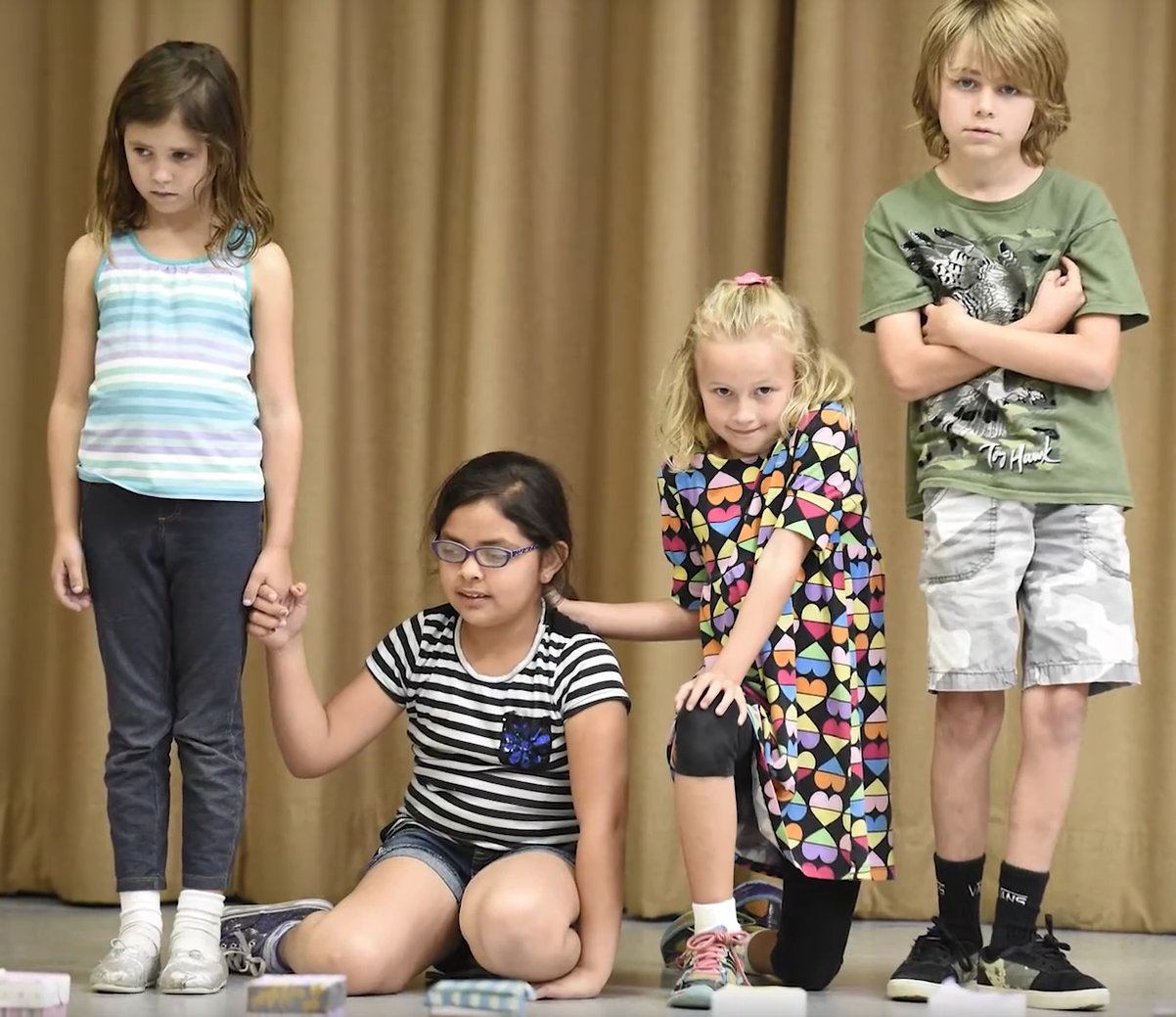
Children can express many things simply by being still. In dance language we might call this making a “body shape”, but children can brainstorm as many names for it as they wish - e.g. statue, freeze - they all mean the same.
In stillness children can explore many nuances including: levels in space (high, medium, low); 2D and 3D shapes; symmetry and asymmetry; shaping of their torsos (straight, curved, rotated); expressive detail of their limbs and hands, feet and head; intention, expression, exaggeration, and meaning-making.
Notice this quartet group of dancers in stillness. What levels do you see? How are their torsos and limbs shaped? What meaning do you read in their body language and facial expression?
#2 - GESTURE
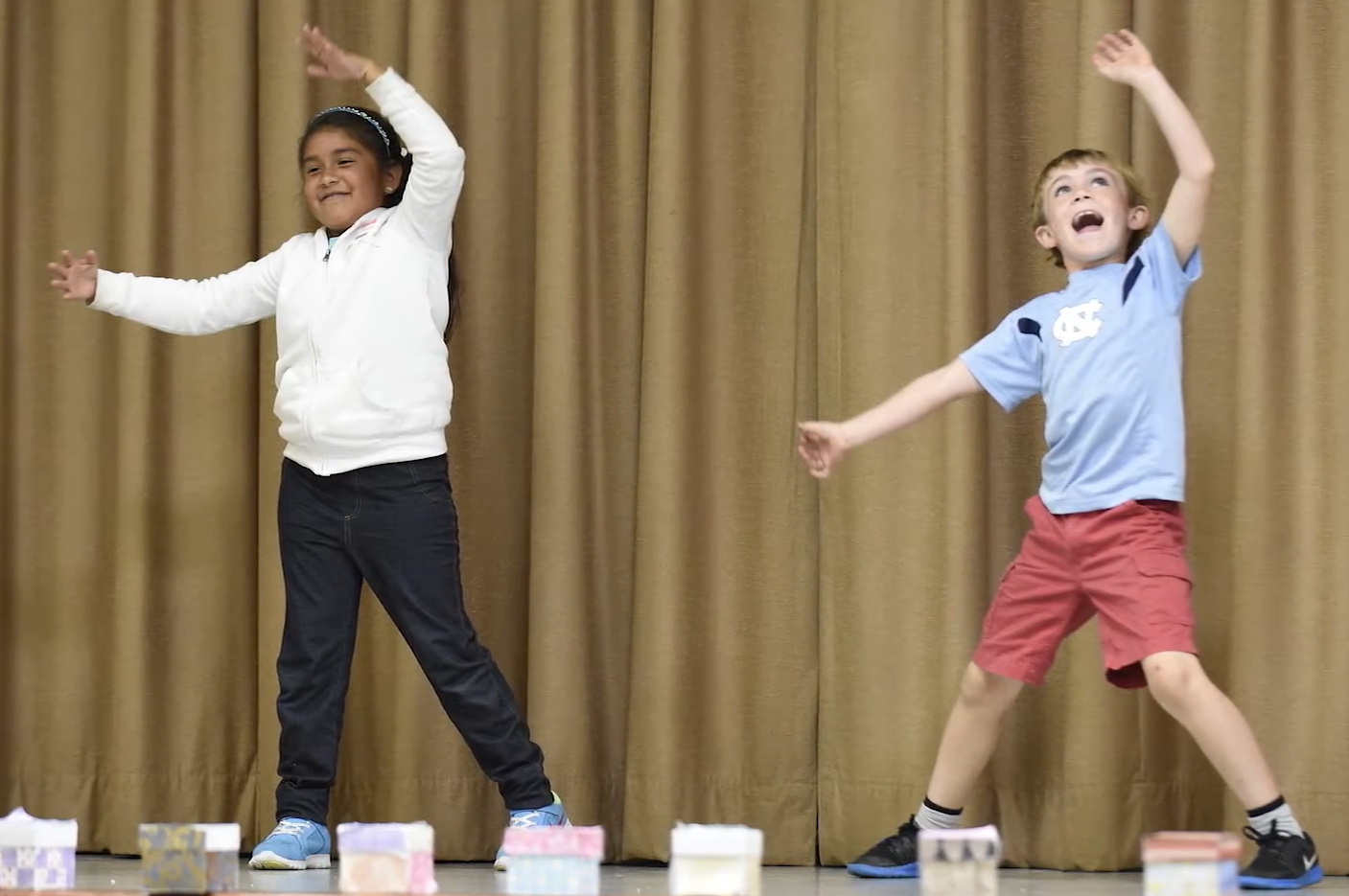
Gesture generally refers to arm, hand, leg, feet, and head actions that add detailed expression to the movement.
Just like in everyday life where a nod of the head or a wave of a hand communicates meaning, so too can gestures in dance convey a wide range of ideas.
Exploring gestures also gets children to be detailed, intentional, and reflective about what their dance is communicating.
Where and how do you imagine these dancers’ arm gestures are moving through space? What feeling do the gestures give you?
#3 - LEVELS
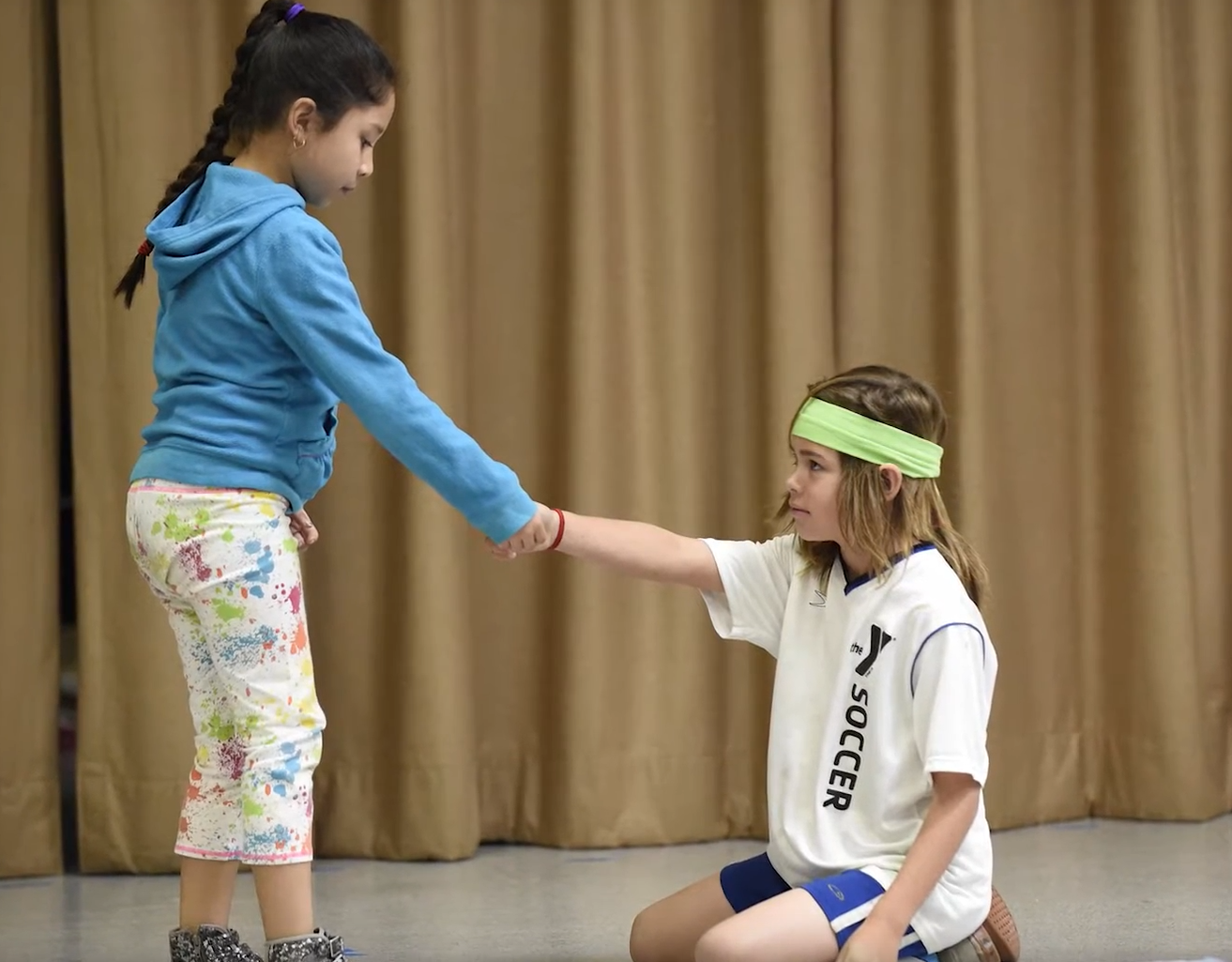
Levels are the vertical aspect of space that we can move through. Levels include high (e.g. on tiptoe or leaping), medium (e.g. lunging with knees bent), and low (e.g. sitting or lying on the ground).
Inviting children to explore different levels involves problem-solving, which develops their creative skills.
Critical thinking, problem-solving, creativity and innovation are skills we want children to develop in creative dance.
What levels are these two dancers on?
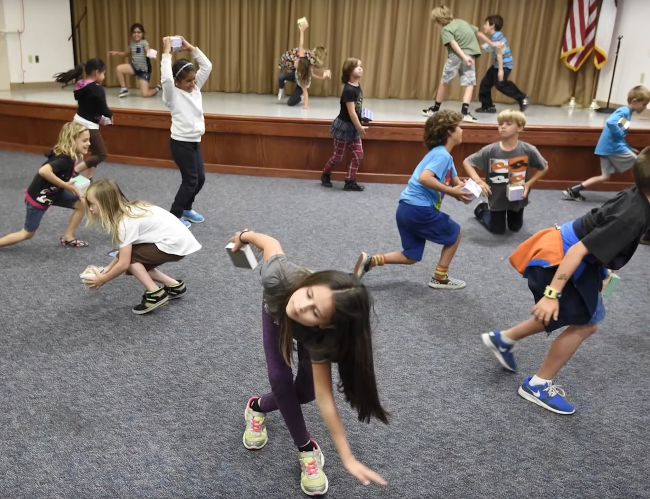
And what different levels are the dancers below exploring?
#4 - AXIAL, LOCOMOTOR, PATHWAYS
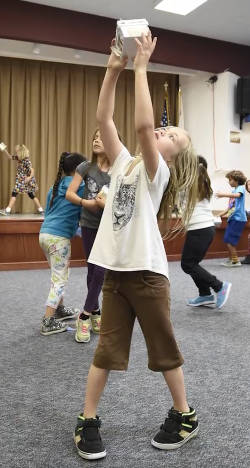
Body actions can take place on the spot and while traveling through space. We call on the spot actions “axial” (sometimes also called non-locomotor). Actions that travel are called “locomotor”.
When exploring axial actions, children can further develop their skills of being still, gesturing, and moving on different levels.
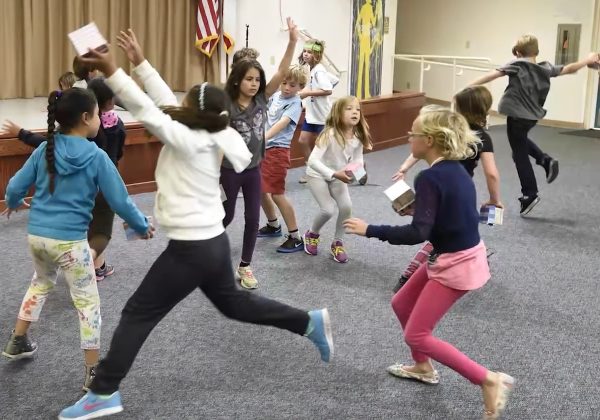
Exploring locomotor movements brings added challenges of HOW to move through space and on what pathways, e.g straight, curving and zig-zagging.
What axial and locomotor actions do you see in these two images?
#5 DYNAMICS
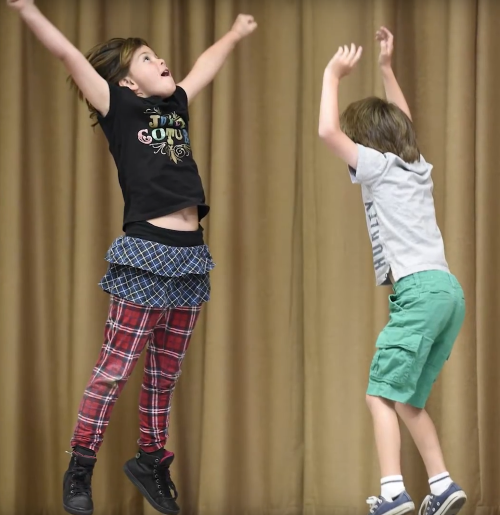
“Dynamics” refers to the qualitative feeling of movement. It allows children to fully express the meaning of the dance.
Adverbs and figurative speech are helpful when exploring dynamics.
Children can move as quick as lightning and as slow as the setting sun. As light as a feather and as forceful as a powerful tiger. As straight as an acorn falling from a tree and as roundabout as snow swirling. As fluid and free as water and as precise as a crystal forming specific shapes.
What dynamic qualities do you see in this image? Slow or fast? Strong or light? Straight or roundabout? Free or controlled? A combination of these? Does the dynamic quality feel the same in both dancers, or does it feel different?